
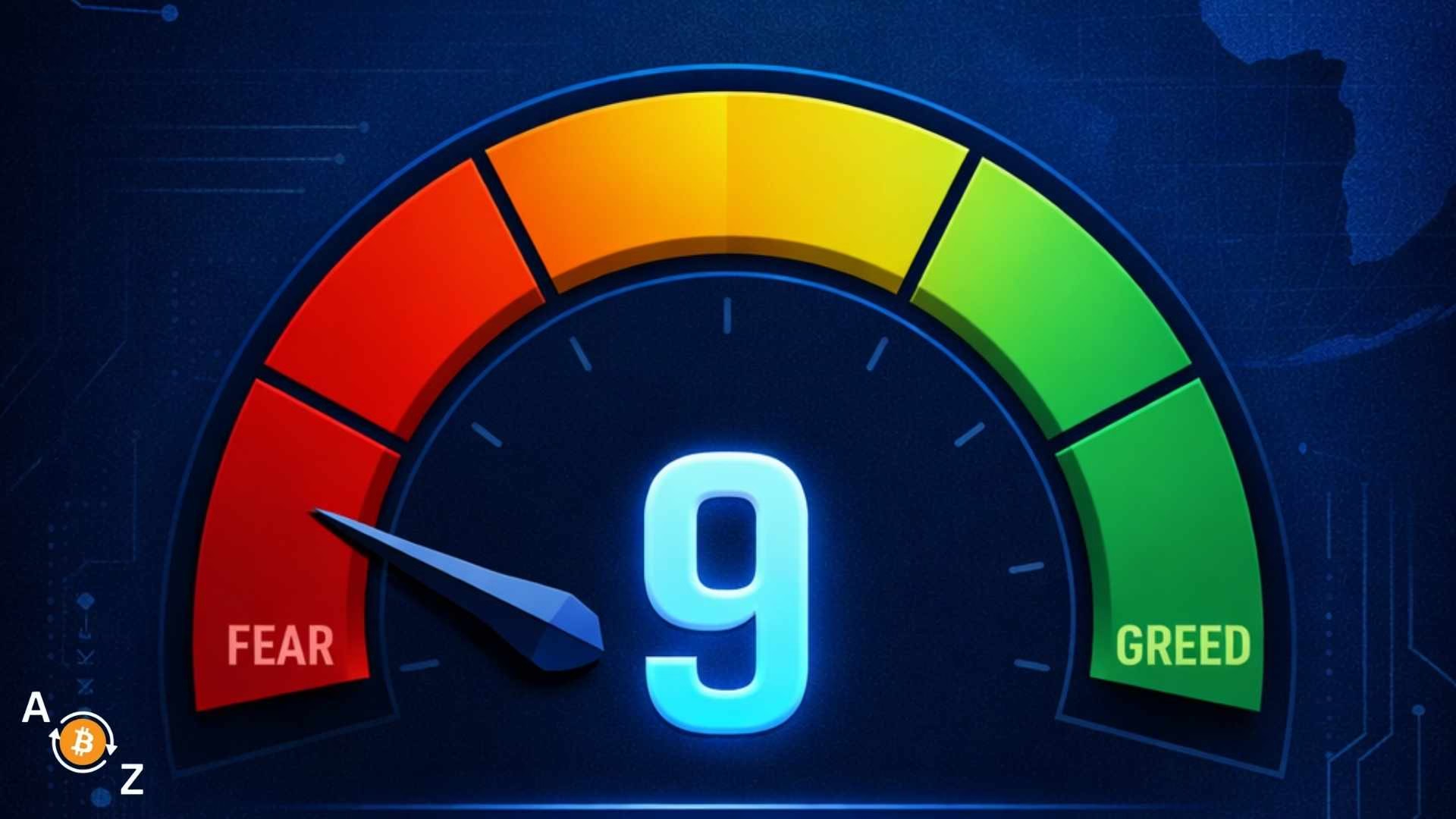

- Global macro instability: Ongoing conflicts (Russia–Ukraine, Iran tensions) disrupting trade flows and investor confidence
- Energy shock: Crude oil surged ~100% (Dec 2025–Mar 2026), driving broad inflation across sectors
- Food supply pressure: Russia + Ukraine accounted for ~30% of global wheat supply, worsening food inflation
- Inflation spillover: Higher fuel costs are increasing logistics and production expenses globally
- Tight monetary policy: Elevated US Federal Reserve rates (~3.75%) continue to drain global liquidity
- Capital rotation: Investors favor US Treasuries over risk assets like crypto and equities
- Crypto underperformance: Altcoins down 90–95%; overall sentiment remains weak since early 2025
- Bitcoin resilience: BTC reached ~$126K (Oct 2025), supported by institutional inflows
- Demand slowdown: Retail participation is declining due to inflation, high borrowing costs, and job insecurity
- AI disruption: Rising layoffs in tech further weaken consumer and investor confidence
- Liquidity crisis impact: Reduced capital inflow, suppressing crypto market recovery
- Recovery triggers: Expected Fed rate cuts and easing geopolitical tensions
- Forward outlook: Potential BTC upside to $150K–$200K if macro conditions improve in 2026
Global Economic Uncertainty (Food, Fuel, and AI)
Crypto and stock markets have been getting buried over the last two months, starting around Feb 2026, due to uncertainty in global trade and geopolitics. Neither the Iran war nor the Russia-Ukraine war seems to come to an end.
Food and Fuel Shortage
Continuation of the conflict not only chokes global supply chains for critical suppliers, such as fuel and food, but also sanctions on this economy prevent the trade in finished goods.
Before the war, Russia and Ukraine together made up to 30% of the global wheat supply. Dominance and global food supply. Further, the Strait of Hormuz (under Iran’s control) alone controls 25% of the global fuel supply.
As a result, the price of crude oil has increased by at least 100% over the last 90 days (from $55 in December 2025 to $110 in March 2026). Since crude oil is used to produce diesel and petrol, which are again critical for the transport of goods across all sectors, the prices of all goods and services have recently increased.
In recent times, you might have seen a rapid increase in the prices of food items and cooking essentials, and also in petroleum derivatives.
AI-Led Layoffs
Further, there is a market disruption driven by artificial intelligence, which has again led to layoffs across several tech companies worldwide.
Crypto Suffers More than TradFi
Crypto markets tend to suffer more due to certain entities because it is a relatively new asset class and lacks the confidence of investors who have traditionally operated in sectors like stocks, gold, and silver.
Liquidity Shortage
The crypto markets have seen a liquidity shortage due to rate hikes by the United States Federal Reserve in 2023 and 2024. The total rate hike at the end of the rate cards was around 5.25% in June 2024. Since then, only three rate cuts have taken place, totaling 1.5%. The net effective federal funds rate lies at 3.75% as of March 2026.
Such a high Federal Funds Rate attracts investors from around the world to invest in risk-free US Treasury bonds. As a result, the liquidity from other markets has been sucked away, leaving them in a perilous condition.
Crypto markets have been reeling under liquidity pressure since January 2025.
However, Bitcoin’s price rallied to $126,000 by October 2025, largely driven by institutional purchases. The broader crypto markets, also called the Altcoin markets, have seen 90 to 95% corrections since their recent high. The sentiment in the broader crypto markets has been extremely pessimistic for the entire period since Jan 2025.
Demand Slowdown
As institutional funds slowly exhaust, we see a slowdown in crypto market demand because retail investors have already been at a low participation level due to higher interest rates on loans and higher-than-expected inflation numbers.
Another reason for the slowdown in retail demand is AI, which has scared off almost every blue-collar and white-collar worker.
The combined effect of these two forces the investor to think twice before buying or investing.
When will Crypto Markets Recover?
Crypto markets are expected to recover only when two things happen: the first is the end of the liquidity crisis, with a Federal Reserve interest rate cut decision; the second is the end of hostilities in both conflict zones, namely Iran and Ukraine.
We expect this to happen at the June 16-17 Federal Reserve meeting, with a 0.5% to 1% rate cut. The reason for this expectation is that the US government needs lower rates to refinance. It’s maturing treasury bills in December 2026. If a rate cut does not lower interest rates, the bonds have to be refinanced at a higher rate than their issue rates, which will significantly increase federal debt.
Bitcoin Price Outlook for 2026
Main Article: Bitcoin Price Analysis 2026
We have included Bitcoin’s price analysis for 2026 in this article, as Bitcoin accounts for around 60% of the crypto market.
Bitcoin is expected to make a new all-time high in Q2 of 2026 (April to June) amid rising expectations of a lower interest rate by the US Federal Reserve under a new Chairman. We expect a price of $150,000 in Q3 and $200,000 by year-end.