
What Legal Battles Does a Failed Crypto Project Face?

A bootstrapped company might apply for winding up (which requires no legal battles) whereas a venture funded or a debt-funded project might have to go through traditional bankruptcy proceedings.

A bootstrapped company might apply for winding up (which requires no legal battles) whereas a venture funded or a debt-funded project might have to go through traditional bankruptcy proceedings.

Bitcoin has traditionally been the simplest way to gain exposure to the crypto market. But a new generation of investment funds is taking a different approach — using quantitative models, derivatives, arbitrage, and market-neutral strategies to seek returns without relying…
How a Technology-Driven Investment Firm is Redefining Digital Asset Investing Through Systematic Research, Proprietary Infrastructure, and Institutional Risk Management The digital asset industry has undergone a profound transformation over the last decade. What began as a largely retail-driven market has…
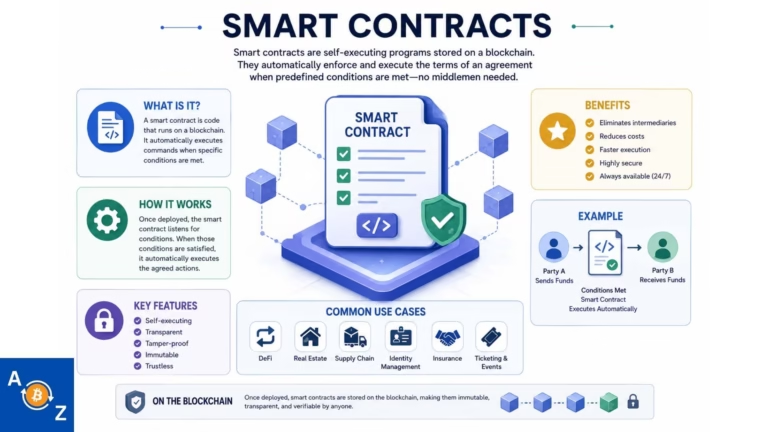
Smart Contracts are pieces of code deployed on a blockchain that execute a specific set of tasks assigned to them based on factors defined in their logic.

We expect a market-wide surge to $100k per Bitcoin; however, further gains are capped due to high Federal Reserve interest rates, which have choked market liquidity.
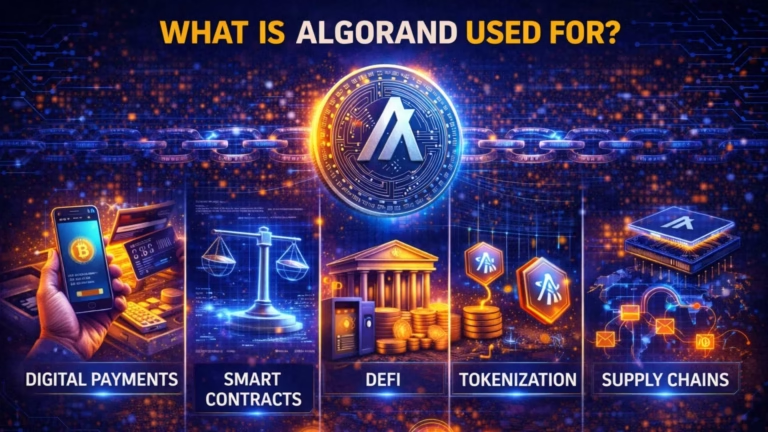
Like any other blockchain, Algorand is used to transact funds from one user to another at an ultra-low cost.

Algorand is a dual-layer, quantum-resistant, highly scalable, decentralized, and ultra-low-cost blockchain

Prominent names added to Grayscale's list are Canton (CC), Toncoin (TON), Tron (TRX), Hyperliquid (HYPE), Worldcoin (WLD), Monad (MON), and Jupiter (JUP).

Report by Crypto Quant shows that Ethereum network activity has reached an all-time high of 1.3 million transactions per day.

Japan has cut crypto taxes from 55% to a flat 20%, in a bill passed on 31 March 2026.
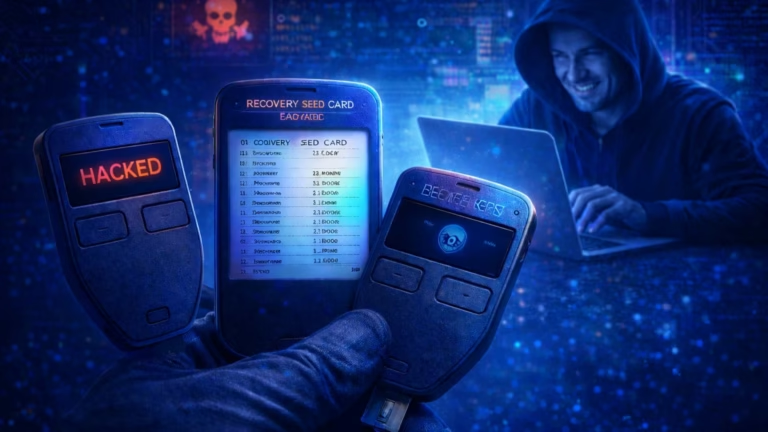
Kaspersky has been detecting fake hardware wallets for the last three years, with most of them being sophisticated lookalikes of Trezor.