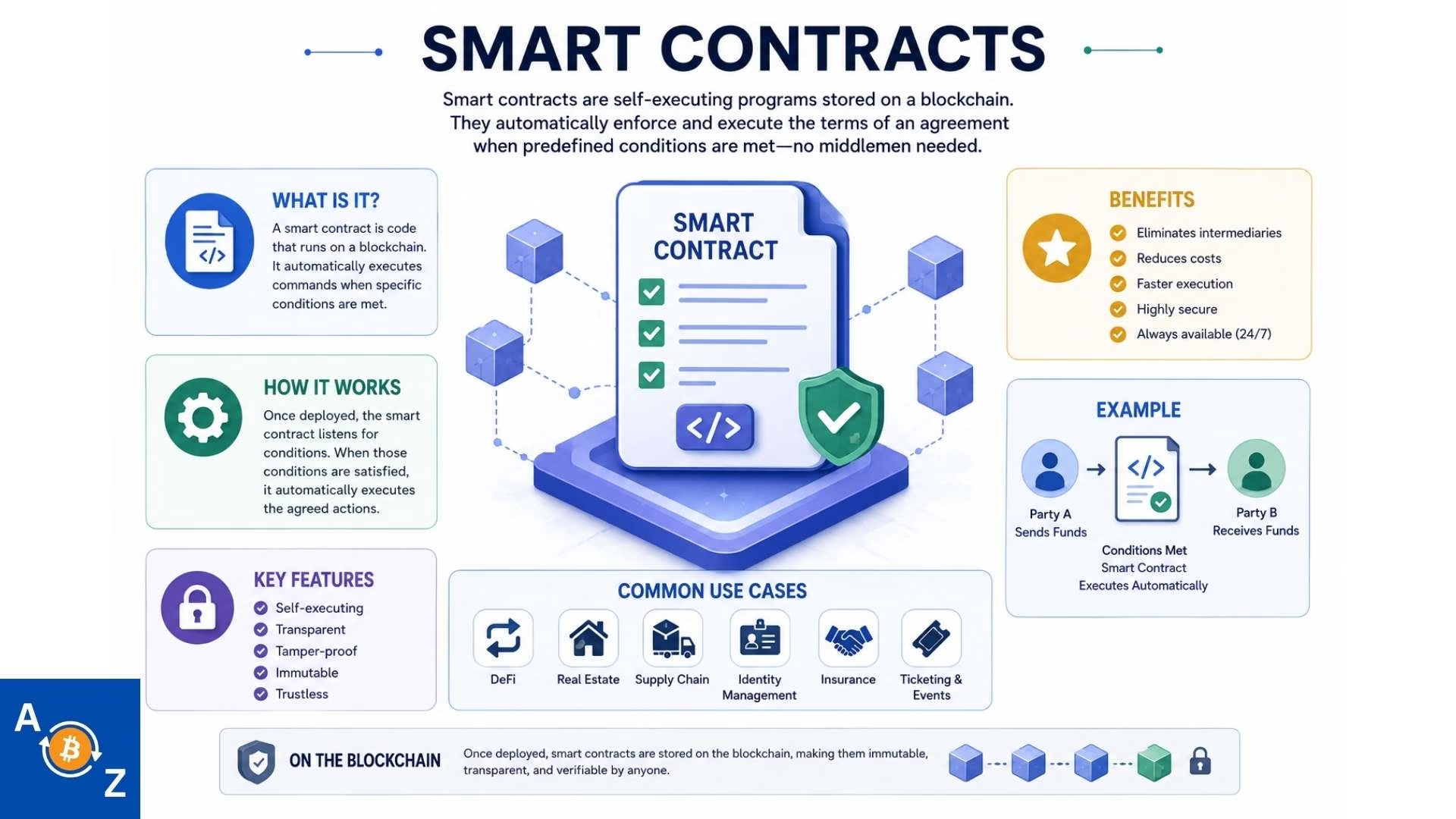

Smart Contracts are pieces of code deployed on a blockchain that execute a specific set of tasks based on factors defined in their logic. They are the code that powers specific applications, such as DeFi, dApps, and escrow, on blockchains.
Definition
Smart Contracts are pieces of code designed to implement various applications on smart contracts. They are used to automate tasks in blockchain that otherwise require manual effort in daily life.
These smart contracts are live on the blockchain and work as independent software with their own crypto wallets, capable of sending and receiving transactions. As a result, they are central to programmable blockchains such as Ethereum, Solana, and BNB Chain.
How are Smart Contracts Created?
Coding
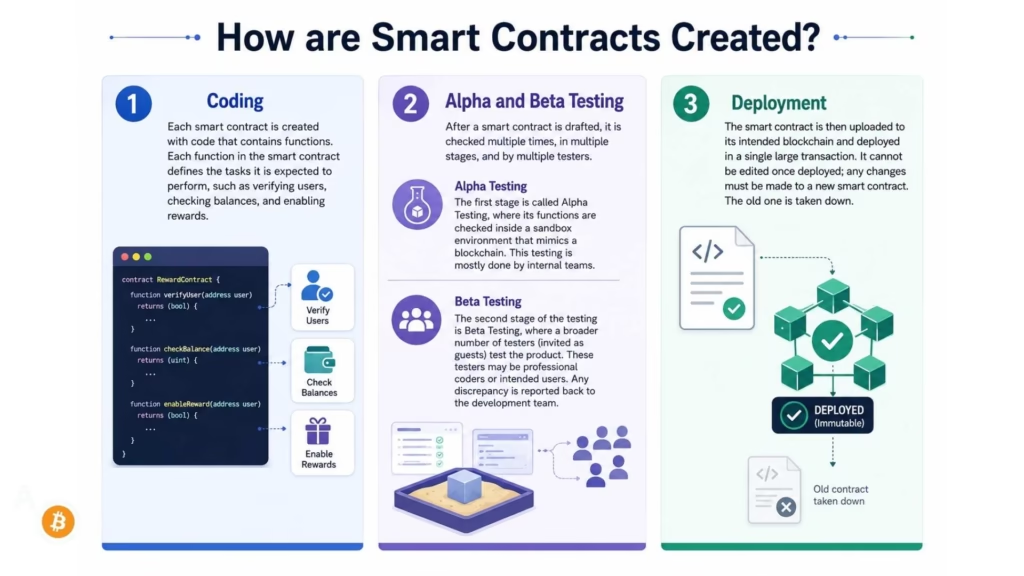
Each smart contract is created with code that contains functions. Each function in the smart contract defines the tasks it is expected to perform, such as verifying users, checking balances, and enabling rewards.
Smart Contracting Languages
A smart contract can be written in a number of languages (listed below), each with unique characteristics and, for that reason, adopted across different blockchains.
- Solidity
- Rust
- C++
- C
- Vyper
- Cadence
- Clarity
- Move
- Go
- Ink
Alpha and Beta Testing
After a smart contract is drafted, it is checked multiple times, in multiple stages, and by multiple testers.
The first stage is called Alpha Testing, where its functions are checked inside a sandbox environment that mimics a blockchain. This testing is mostly done by internal teams.
The second stage of the testing is Beta Testing, where a broader number of testers (invited as guests) test the product. These testers may be professional coders or intended users. Any discrepancy is reported back to the development team.
Deployment
The smart contract is then uploaded to its intended blockchain and deployed in a single large transaction. It cannot be edited once deployed; any changes must be made to a new smart contract. The old one is taken down.
How do Smart Contracts Work?
Smart contracts respond like typical software when users interact with them. Each request comes with a response. Further, this response is predictable and repetitive.
For example, if I swap $10 worth of ETH for USDC (with fees), I will receive 10 USDC.
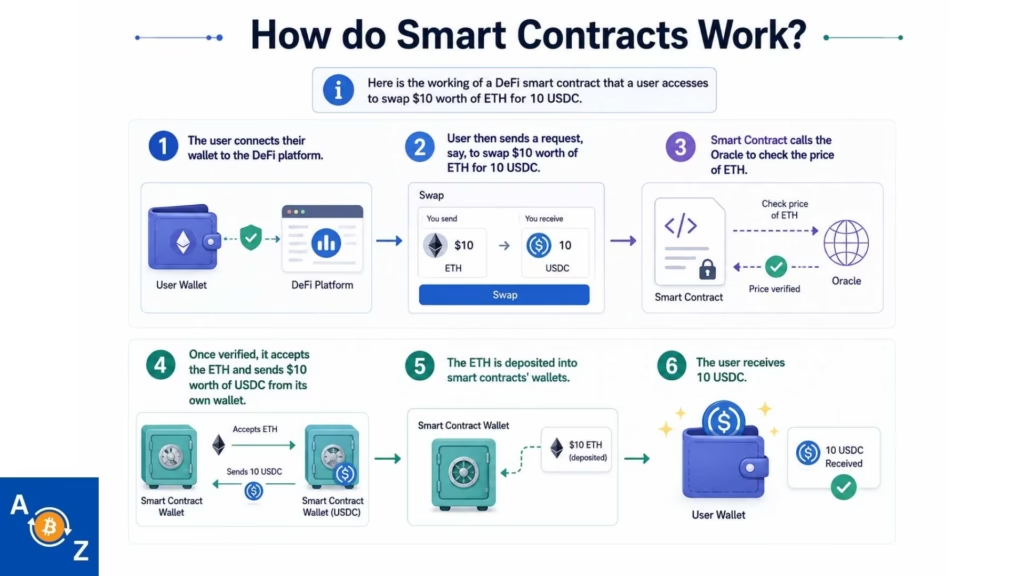
Each transaction associated with a smart contract follows similar steps. Here is the working of a DeFi smart contract that a user accesses to swap $10 worth of ETH for 10 USDC.
- The user connects their wallet to the DeFi platform.
- User then sends a request, say, to swap $10 worth of ETH for 10 USDC.
- Smart Contract calls the Oracle to check the price of ETH.
- Once verified, it accepts the ETH and sends $10 worth of USDC from its own wallet.
- The ETH is deposited into smart contracts’ wallets.
- The user receives 10 USDC.
Applications
Decentralized Exchanges
Every decentralized exchange (DEX) needs a smart contract to exist. These smart contracts are at the core of the exchange, working to allow users swap, bridge, borrow, stake, and lend cryptocurrencies. Here is the smart contract’s address that powers the Uniswap token.
Every smart contract associated with a DEX also has its own smart contract, which holds all the crypto liquidity of the DEX. This smart contract address is controlled by a master address that created and deployed the smart contract on that blockchain.
DeFi Protocols
DeFi Protocols such as Hyperliquid are similar to DEXs in terms of working; they just offer more options, such as liquidity staking, pools, multi-chain lending and borrowing, etc. They, too, have a smart contract at their core, which facilitates everything that the protocol does.
There can be one or multiple smart contracts at the core of these protocols.
Decentralized Applications
Decentralized Applications too have smart contracts that help them automate functions. For example, Axie Infinity, the popular NFT-based game, has a smart contract that holds accounts of all user funds, tokens, NFTs, and additional assets in the game.
Auctions
Auctions were one of the primitive applications of smart contracts because, unlike traditional auction software, they are more trustworthy and transparent. Smart-contract-based auctions can keep track of who bid first or last, even if there is less than 1 second of difference between two bids.
NFT Minting
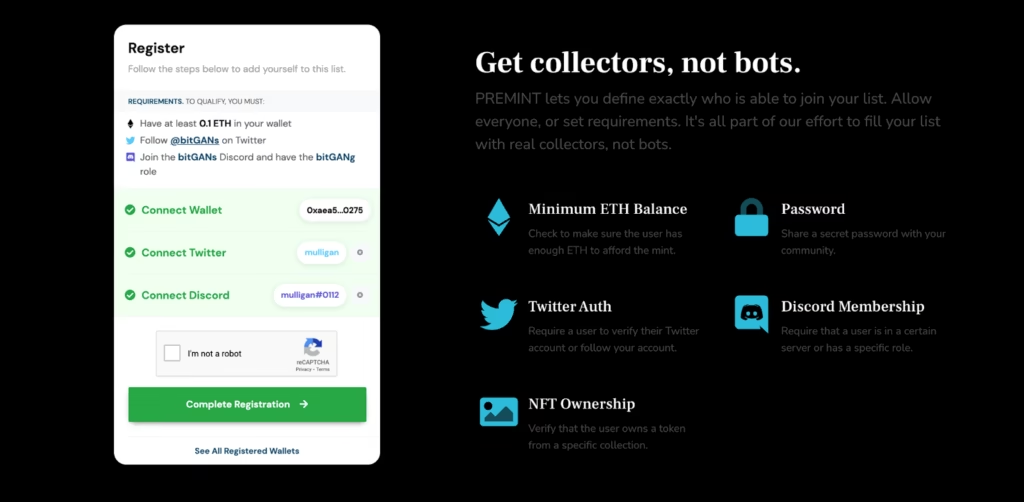
ANFT minting requires the submission of bids and fees by various users, which are then whitelisted and allowed to mint limited NFTs. All these require transparent smart contracts which only allow whitelisted users to mint NFTs.
Smart Contract-based Wallets
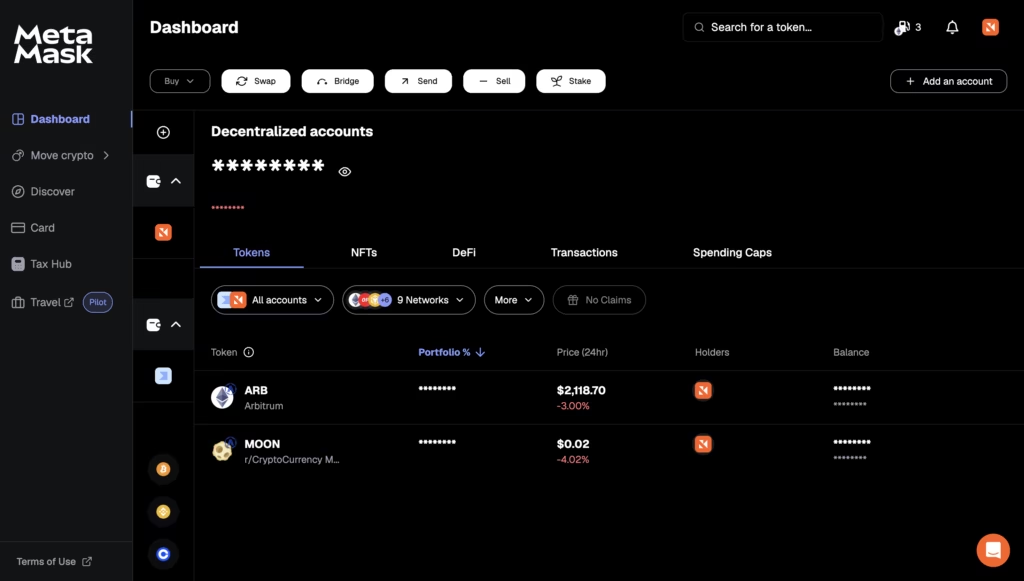
Smart Contract-backed wallets often act as smart wallets as compared to ordinary wallets, which are just used to keep your blockchain address keys.
Smart Contracts help wallets offer features such as social recovery, better safety, and allow the user to access DEX-like features without leaving the wallet. For example, take a look at this smart contract-based MetaMask wallet.
Frequently Asked Questions
Can Smart Contracts be hacked?
DISCLAIMER: All information presented on A2Z Cryptocurrencies (https://a2zcryptocurrencies.com) is purely for informational and educational purposes and does not amount to financial advice in any way. Please consult a financial advisor before investing.