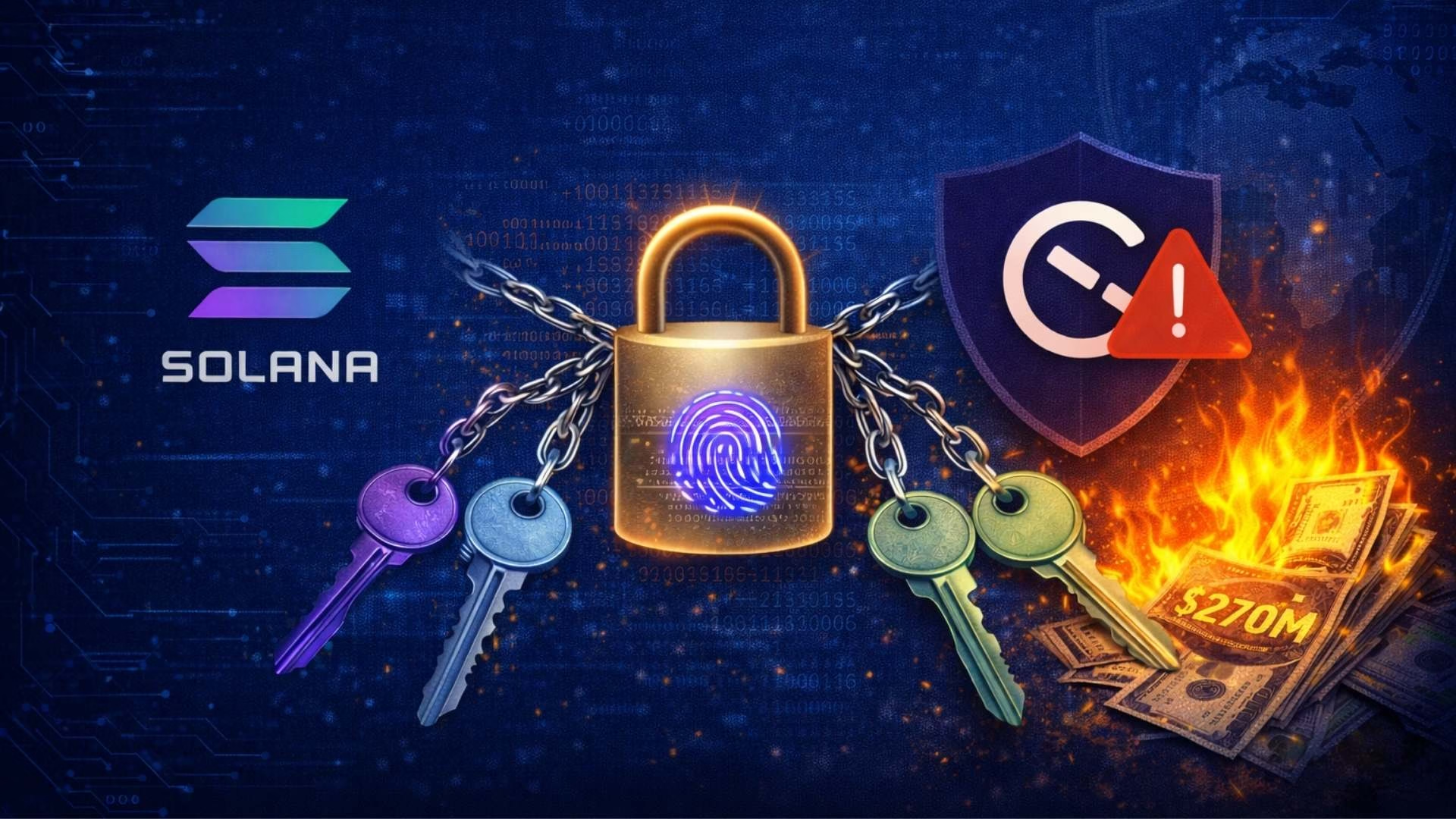

- Arthur Hayes said that native multisig key support on Solana could have prevented the Drift Protocol hack, which lost $270 million.
- Native Multisig can be verified by blockchain consensus because signatures occur on-chain, unlike wallet-level multisig, where signatures occur off-chain.
- Solana and Ethereum lack native multi-sig support. It supports multisig via its Program Derived Address (PDA) feature, which allows smart contracts to sign transactions, rather than allowing multiple signatures to be attached to a single address.
- Possible involvement of the Lazarus Group from North Korea, which was also involved in the Bybit hack.
How Could Native Multisig Prevent the Drift Hack?
The Drift Protocol on Solana was exploited on 31 March 2026 by a phishing attack, in which the protocol’s funded wallets were compromised using pre-signed transactions via a feature called Durable Nonces. The hackers signed two of the five required signatures in a wallet-level multisig weeks before draining the funds.
Arthur Hayes, founder of Bitget and social media influencer, questioned whether native support for MultiSig wallets could have somewhat prevented the hack.
At present, Solana and Ethereum lack native multisig support, forcing users to rely on third-party wallet providers for the same.
The crypto community on X responded, saying MultiSig could have indeed prevented the hack, as it would have reduced the scope of human error in key management which in this case was the largest reason for the hack.
The Drift Protocol Hack Explained
The Drift Protocol lost around $270 million after being attacked by hackers who exploited its pre-signed transactions to drain the exchange reserve wallets.
The exploit was successful because transactions were signed using durable nonces, which allows users to pre-sign transactions weeks before they are scheduled to be executed.
The hackers signed the transaction at least a week before draining the funds by acquiring control of at least 2 out of 5 signatures in the multisig wallet of the exchange.
What is Native Multisig? How it Differs from Wallet Multisig?
Native Multisig is a signing method where transactions are signed on the blockchain and can be validated by on-chain consensus mechanisms. It is executed completely on the blockchain.
Wallet Multisig refers to a process where transactions are first signed off-chain and then fed to the smart contract (which operates the smart contract wallet) for on-chain signing. A problem associated with this process is that the individual signatures cannot be verified by the blockchain consensus, as they can only see the on-chain signatures (here done by the smart contract).
In the Drift Protocol hack, these off-chain signatures were exploited.
DISCLAIMER: All information presented on A2Z Cryptocurrencies (https://a2zcryptocurrencies.com) is purely for informational and educational purposes and does not amount to financial advice in any way. Please consult a financial advisor before investing.